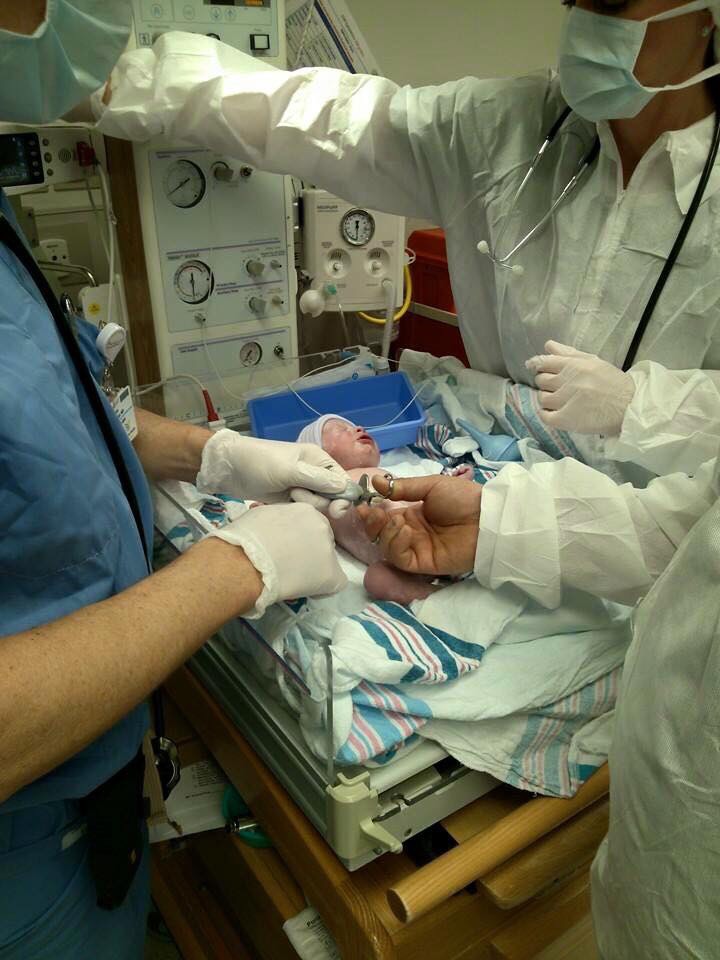
Delayed cord clamping, a subject that comes up often when clients are making their birth plans. Is it the best choice for my baby? Is it dangerous? What are the advantages of delayed cord clamping? When should I do it? When should I not do it?
When making a birth plan I like to cover the good, the bad and the ugly so these are all questions I go through with clients. Delayed cord clamping is one of the big things we outline in multiple situations, since informed consent is so important in a birth setting. Making a plan helps, but it sometimes doesn’t all go to plan so we talk about every situation.
Delayed cord clamping was something that was only done for premature newborns(24-34 weeks) to help with oxygen, organ failure and blood volume. If its beneficial for premature newborns there has to be advantages for our full term babies too! The WHO did studies and found out there ARE advantages for our termies and our preemies! Not only are there benefits for the newborn but there are also benefits for mom!
The WHO states that delaying cord clamping (at least one minute after birth) leaves to improved maternal and infant health. This does not mean to “milk” the cord (or push the blood through) this is specifically letting the cord pulsate to transfer blood from placenta to baby. When delayed cord clamping takes place it should pulsate for 1-3 minutes at the least, ultimately until the cord is done pulsating.
So what are the amazing benefits? Your baby receives 30-60% more red blood cells which means a beautiful pink baby! But what else is baby receiving? Just more red blood cells? Nope! There’s more!! When the baby receives that beautiful cord blood they also receive more oxygen, stem cells and immune cells! This means a healthier baby all around. Some studies are looking at the advantages in older children that had DCC, while the study is premature still, it looks to have benefits into preschool years!
What are the benefits for mom? When cord clamping was delayed it lowered the risks of postpartum hemorrhage in both vaginal and c-section births. Our bodies are supposed to give then every beautiful nutrient from the placenta even when they come earthside. A woman’s body is a truly remarkable and beautiful thing!
So when should you not delay cord clamping? Cord clamping should not be clamped in emergent situations, such as asphyxiation of the baby. The WHO states that it is still possible to delay cord clamping in that event but saving the baby takes precedent so it will most likely not be done. Also, you should not delay cord clamping if you want to donate or store the cord blood. Once it is empty the stem cells that you want to store are no longer in the cord.
In a hospital setting it is possible to delay cord clamping, it is almost standard now that it happens but you should talk to your care provider about it before birth. In a hospital setting they will typically let the cord pulsate for 3 minutes, if you’d like it to pulsate longer advocate for you and your baby! Talk to your care provider, outline it in your birth plan and be sure to mention it while in the hospital.
Delayed cord clamping is a valuable thing that is on the rise around the world! The WHO has been outlining its benefits since as early as 2012 and the USA is starting to catch up! With that being said some doctors may have outdated information/practices so be sure to talk with your care provider about the possibility of delayed cord clamping!


