The Benefits of Delayed Cord Clamping

Featured

Delayed cord clamping, a subject that comes up often when clients are making their birth plans. Is it the best choice for my baby? Is it dangerous? What are the advantages of delayed cord clamping? When should I do it? When should I not do it?

When making a birth plan I like to cover the good, the bad and the ugly so these are all questions I go through with clients. Delayed cord clamping is one of the big things we outline in multiple situations, since informed consent is so important in a birth setting. Making a plan helps, but it sometimes doesn’t all go to plan so we talk about every situation.

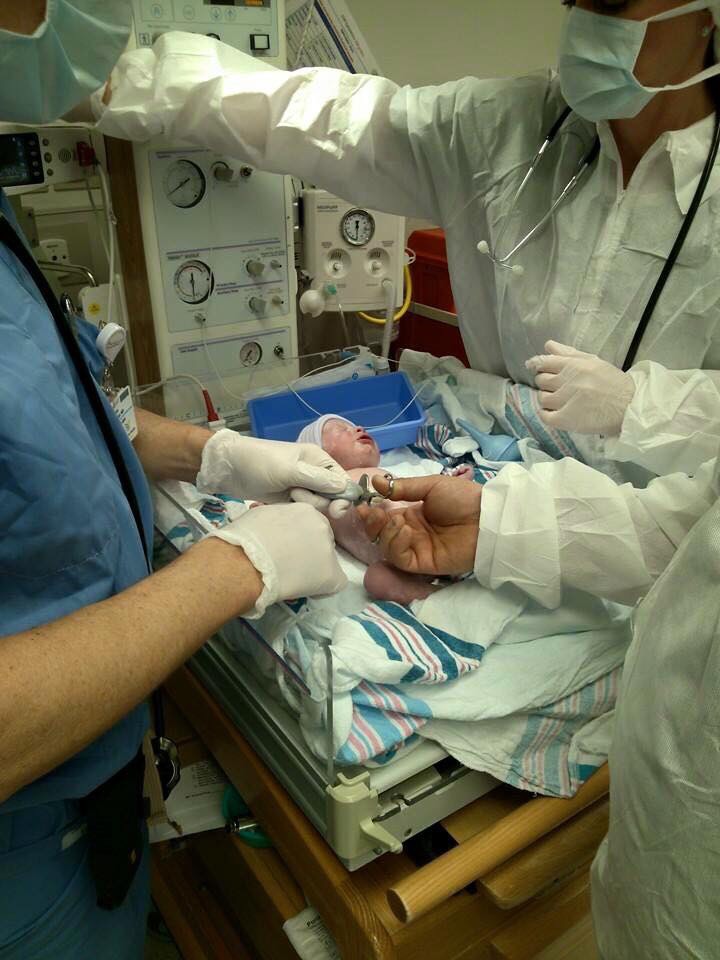
Delayed cord clamping was something that was only done for premature newborns(24-34 weeks) to help with oxygen, organ failure and blood volume. If its beneficial for premature newborns there has to be advantages for our full term babies too! The WHO did studies and found out there ARE advantages for our termies and our preemies! Not only are there benefits for the newborn but there are also benefits for mom!

The WHO states that delaying cord clamping (at least one minute after birth) leaves to improved maternal and infant health. This does not mean to “milk” the cord (or push the blood through) this is specifically letting the cord pulsate to transfer blood from placenta to baby. When delayed cord clamping takes place it should pulsate for 1-3 minutes at the least, ultimately until the cord is done pulsating.

So what are the amazing benefits? Your baby receives 30-60% more red blood cells which means a beautiful pink baby! But what else is baby receiving? Just more red blood cells? Nope! There’s more!! When the baby receives that beautiful cord blood they also receive more oxygen, stem cells and immune cells! This means a healthier baby all around. Some studies are looking at the advantages in older children that had DCC, while the study is premature still, it looks to have benefits into preschool years!

What are the benefits for mom? When cord clamping was delayed it lowered the risks of postpartum hemorrhage in both vaginal and c-section births. Our bodies are supposed to give then every beautiful nutrient from the placenta even when they come earthside. A woman’s body is a truly remarkable and beautiful thing!

So when should you not delay cord clamping? Cord clamping should not be clamped in emergent situations, such as asphyxiation of the baby. The WHO states that it is still possible to delay cord clamping in that event but saving the baby takes precedent so it will most likely not be done. Also, you should not delay cord clamping if you want to donate or store the cord blood. Once it is empty the stem cells that you want to store are no longer in the cord.

In a hospital setting it is possible to delay cord clamping, it is almost standard now that it happens but you should talk to your care provider about it before birth. In a hospital setting they will typically let the cord pulsate for 3 minutes, if you’d like it to pulsate longer advocate for you and your baby! Talk to your care provider, outline it in your birth plan and be sure to mention it while in the hospital.

Delayed cord clamping is a valuable thing that is on the rise around the world! The WHO has been outlining its benefits since as early as 2012 and the USA is starting to catch up! With that being said some doctors may have outdated information/practices so be sure to talk with your care provider about the possibility of delayed cord clamping!

Gentle Weaning

It’s time, you’re ready to stop nursing! Take a breath and give yourself a round of applause and a pat on the back, you put in a lot of work! Whether it was 6 months or 3 years YOU DID IT! Now it is that bitter sweet moment where it ends and you and your nursling enter into a new chapter. It doesn’t have to be torture; it doesn’t have to be filled with meltdowns and heartache. There are many different options to try, but in my opinion the best way is to incorporate all of the options! The most important thing to remember is not to stimulate your breasts so that your milk production can drop down, which will also deter your toddler from trying, and so that you don’t become engorged.  

The first option is elimination. To do this you choose one feeding a day to replace with something else. For example, when your toddler wakes up from their nap and wants to nurse but this is the session you plan on dropping, make a new routine. When they wake up, give a snack and sippy cup with pumped milk, almond milk or water! Do this daily, whatever activity you choose, to create a new routine. When you see your toddler is ready pick another session to drop, so on and so forth! Another option is don’t offer, don’t refuse. This method is really up to your toddler so you’re at the mercy of them forgetting about nursing. The third option is only nursing to sleep. You would drop all nursing sessions except nap and bedtime and these would be the last to drop. If your baby only nurses to sleep then you’re already most of the way there! If you’re there then you get to skip to option four which is create a new bedtime routine! If this is how your nursling falls asleep it’s time to replace it with a book, song, maybe a gentle bath or a backrub. You’ll essentially be sleep training at this point. The last option is to postpone the feedings. When baby asks for the feeding just simple say “not now” and find another activity or just tell baby you will nurse later.  

Ideally, I believe putting all of these methods together really help gently wean your toddler. I would suggest first starting with don’t offer don’t refuse. This way you can see what nursing sessions your toddler really relies on. This method puts it all in the hands of the toddler to decide when to nurse. Don’t remind them about nursing, possibly even keep your breasts covered so it does not remind them that they want to nurse. Let this go on for a week or two so you can really record their schedule to see what is their favorite/ most necessary nursing sessions. After learning their favorite nursing schedule pick one to drop. I do not suggest choosing the nighttime nurse quite yet, I would pick a different time like possibly in the morning or after a nap, even possibly the naptime nurse depending on how independently they go down for a nap. It’s a more controlled time than bedtime when everyone is exhausted. Replace it with a new activity, daily! Toddlers love to be in a routine and it makes things like this easier. This way you can say “not now, let’s color instead!” After a week or two you can pick another and drop another nursing session depending on how well they do with their new schedule! While doing this shorten the nursing sessions you still have so they want to nurse for less time.  

Use bedtime and naptime as the last sessions to drop. When you’re ready for this drop nap time first. Sleep training may be something you need to do when you hit this part of weaning, depending on how they feel about the sleepy time nurse. Creating a new naptime and bedtime routine will be the key to being successful with this part. You can do bath time, story time, a song or rub baby’s back! My kids loved their backs rubbed while I sang them a song to skip those night time nurses.  

Ultimately you know your baby the best. You will decide what method would be best for you and your toddler, none of this is written in stone it’s all suggestions for you to successfully wean your baby. When that time comes the variables will be age, dependency on the breast and the amount of time they nurse during the day. Just like you got over the hump of cluster feeding and night nursing you will get over the hump of gently weaning. You are the best mom for your baby and you got this! 

The Benefits of Extended Nursing

As a nursing mom I have always heard “when are you giving that baby a bottle?” As soon as my babies reached 6 months old I would be asked so many questions as to why they’re not on formula. Well, because they’re my kids and there are many benefits to nursing them into the toddler years! 

Modern western culture spends a lot of time screaming “breast is best” while sabotaging moms along the way with incorrect facts and formula supplementation. The WHO suggests that (if possible) a mother should continue to nurse until 2 years of age. Believe it or not humans are actually meant to nurse for 2.5-7.0 years. While this may not be your goal lets break down the benefits from 12-23 months.  As soon as a baby turns 12 months old cows milk is pushed, as if mother’s milk loses nutritional value. Claims that breastfeeding beyond infancy having no medical benefit actually has no scientific data to support it. From 12-23 months breastmilk contains 29% of energy, 43% of protein, 76% of calcium, 75% of vitamin A, 76% of folate, 94% of B12 and 60% of vitamin C needed for your toddler’s daily nutrition.  

Going beyond 2 years also has its benefits. In milk from mother’s nursing longer than 2 years there was a higher concentration of total protein, lactoferrin and immunoglobulin A. Children that nursed for the first 3 years had fewer illnesses than those that were weaned sooner. Antibodies in mother’s milk seems to increase in the 2nd year of nursing. Extended nursing could actually prevent 10% of deaths in children under 5 according to the WHO! 

The benefits of extended nursing goes beyond just nutrition and illness prevention, it’s also good for their growing mind and independence. Children that nursed longer have improved cognitive achievements as well as better mental health. Believe it or not soothing them and giving them the breast actually makes them more independent. Meeting dependency needs actually increases independence! 

Moms benefit from extended nursing as well! Mom’s that nurse longer have a lower risk of uterine, endometrial and ovarian cancer. You have a lower risk of breast cancer, osteoporosis, cardiovascular disease and rheumatoid arthritis! It’s about time these kids start to give back! 

Breastfeeding beyond the age of 12 months has a lot of benefits, pediatricians will start to push you to stop but this is a choice that is really between you and your baby. No matter what your desired goal is you should make that choice from a place of information and not pressure. You should be proud of nursing for 6 weeks or 6 years!  

Birth Planning

Birth is an uncertain time and it can cause some anxiety due to the unknown. When will I go into labor? How will it happen? How will I handle it? While I cannot answer these questions with certainty the one thing I can do is educate you and give you most scenarios to plan. I will upload my template in the group so you can print it out and fill it out and send it to me.

Lets first go over how to plan your birth. Think of your absolute ideal birth, now we need to put it on paper. With the ideal birth in our head we must also plan for the off chance that it doesn’t turn out exactly as planned, still leaving you with a feeling that you’re the driver of this bus. The first thing you will outline is if you have any medical conditons and who your birth team is, this will be important as to how you plan this. The next thing we will be outlining is induction methods you prefer, if any, and pain management measures. A birth plan is not just for an unmedicated birth, please do not think that, it is for an educated birth. While you think of each scenario you educate yourself on the alternatives. Outline pain management scenarios, for example “the choice to use an epidural will be used in labor. Please do not ask me, I will discuss it with my doula and I will request an epidural”.

Let’s talk prelabor and due dates, it needs to be discussed how you will handle induction talk if you are not interested in induction methods. Induction will be talked about, even in a healthy pregnancy, at about 39 weeks. It’s best if your doctor has your birth plan prior to that time so they know how you feel about inductions, no matter if it is a yes or a no and what methods you are open to. Think about where you would like to begin prelabor, how long do you want to remain at home? Do you want to go to the hospital/birth center as soon as you hit 4-1-1 or would you like to labor at home for a while?

During labor think about how you feel about cervical exams. Do you want limited exams? Exams only when you ask? No exams at all? Cervical exams are not mandatory, you get to outline this. Think about the environment you want to birth in, is there something that brings you great joy? We want to make the most natural oxytocin so it can be anything from a scent to a music playlist or maybe just a ton of hugs from your birth partner. How do you want to get your labor to progress? Would you like to use the birth ball, walking, squatting? This is your birth and you get to decide how this will happen!

Next up we need to think about pushing and this topic really needs to be discussed early on with providers. Most make you push on your back, but not all. If you’re interested in alternative pushing methods it’s a good idea to ask about policy and submit this to your provider prior to your birth. Also think about who wants to catch the baby, if you want to see the baby born, if you want to touch the baby’s head as they crown, do you want to wait until you feel the urge to push, be coached while pushing? Do you want the placenta to be born naturally? Do you want your placenta after birth?

The hard and uncertain things about birth also need to be talked about, like if a C-Section is imminent how do you want to handle this? Be sure to put in there that you would like a moment, if possible, to discuss all choices with your birth team. Have them explain your options as well, like is a gentle c-section an option? Have them explain the procedure to you and still take control of your birth. Also think about if the baby has to go to the NICU how would you like that handled, would you like somone from your birth team to go with the baby? While these are hard topics to think about, they are necessary just to outline in your plan. I actually toured all the possible NICUs that my twins would potentially go to, met the nurses and became familiar with their policies.

Now that the birth is over lets talk about the post birth experience, baby is here with you and now you are advocating for baby! Would you like delayed cord clamping and for how long? How do you feel about eye ointments and the hepatitis B Vaccine? Do you want immediate skin to skin and breastfeeding? Would you like to forego all baths and testing for 24 hours? Will you be circumcising? What do you want for postpartum pain management? These are all important things to think about as well and are outlined on the birth planning form I will provide for you.

Now we need to think about how do we want to convey the message so it is heard loud and clear? There are two ways you can do this, you can use a visual birth plan where it’s a little more concise using icons to explain what you want or you can use it in paragraph form where you can really explain in detail what you want or bullet points. This will really depend on how you feel it will be best for your birth team and your provider to come together. Let’s get started writing these plans! I’m so excited to read them and help you through this process!

Informed Consent

Giving Birth is a natural experience but it has become a little more medical than it needs to be at times. Having an obstetrician does not automatically mean that your choices will be taken away, you just need to stand up for your rights and remember you’re still in control. We lose a sense of control with fear and lack of information, while birth doesn’t always be planned having a plan helps us cope and take away some of the uncertainty.


The first thing I always discuss with clients is using your B.R.A.I.N.! Let’s go over what that acronym means.
Benefits
Risks
Intuition
Alternative
Nothing


No matter what the procedure is you should be asking these questions but we will use one common practice as an example, rupture of the membranes. Often times they want to rupture the amniotic sac, they offer the benefit as it “speeds up labor”. That seems amazing when you’re in the thick of the contractions but there are more things to ask, like what are the risks? Will I be on a time clock once its broken? Next is your intuition, your gut feeling. Do you feel like your labor would benefit from this? The next is the alternative, what can we do besides breaking my water? Can i move more? Use the peanut? Change positions more frequently? Lastly, do nothing. This means to let things progress naturally and without intervention. If mom and baby are okay there is not really much reason to speed things up, labor is a long process so letting the water break naturally is probably the better option.


Always ask questions before your procedure! You should know exactly what is happening and why it is, even down to blood work. We aren’t all in the medical field so having things explained to us is very important. Here are some questions you can ask as an example:


“Why do I need this drug or procedure?”
“Will my baby and I be healthier for taking it/having it done?”
“Is it just routine?”
“What are the known side effects?”


“Will the benefits outweigh the risks? What is the risk to me or the baby if I don’t have it done?”
“Are there alternatives that can be tried before this procedure or drug?”

We also need to discuss the language of consent. This seems to get blurred between healthcare provider and patient. As the healthcare provider they do not automatically get consent for whatever they want to do, it still needs to be asked. Some language that is not consent is:
“I’m going to check your cervix now.”
“It’s protocol.”
“It’s mandatory.”


No. This is not consent. Language of consent looks like this:


“Would it be okay if I check your cervix?”
“Can I check your cervix now?”


This is still your body and your baby, no one else gets the power over you or your body. It’s good to get to know your provider in the beginning to see how they deal with the hard questions. You should be asking questions like:


“What is your induction policy?”
“What are your views on birth plans?’
“What are some of your mandatory tests and procedures?”
“Do you require cervical checks at 36 weeks?”
“What is your pushing protocol?”
“What is your protocol on doulas?”
“What is your protocol on IV use?”


If the answer is anything besides “It is up to you, unless there is an emergency,” run. This is your birth, your baby and your body. Your provider is there incase of emergencies not to tell you how to do things. There are obstetricians that will respect this.


An infamous card they pull while trying to push you into things is something we call the “dead baby” card. This card was pulled on me and I was pushed into a C-section, this card is the one that made me become a doula. They instantly tell you that your baby will die if you don’t do exactly what they say..but the truth is if they aren’t rushing you to the OR while running (I had an emergency section as well, unfortunately and this happened) then you have time to talk about it and try another alternative. A good way to buy time is to say “I need a minute to discuss this with my partner.”

When preparing for a birth you should always check the C-section rates of the hospital as well and take a tour of the hospital. Join your local mom groups as well and ask about their experiences with certain providers. A hospital birth can be just as magical as a birth center birth, I have attended them, you just need to find the place and the doctor that is the right fit for you!

Solids and Breastfeeding

The age-old debate is “when should I start solids?” Let’s answer that question plus more, such as a nursing schedule to keep and a little bit of baby led weaning. Solids should not be started until 6 months of age or showing food readiness. Solids before one are not a requirement, food before one is just for fun! This means that baby should be getting most of their calories from breastmilk but can start to experiment with solids. For example, breastmilk has 20 calories per ounce opposed to fruits and veggies that are 30 calories total. We don’t want them to fill up on the solids, just more or less experiment and try them. Solids will not make them sleep longer, so feeding them more will not change any rough sleepers, that is another developmental milestone.

When your baby is 6 months old or showing food readiness (which could be older for some babies) your baby will only have about one “meal” a day. You’re still going to nurse on cue, and you can offer a sippy cup of either breast milk or water, it is safe for baby to have about 2 ounces of water. They will probably only sip it and they usually let most of it run out of their mouths. At about 7 to about 9 months you can offer 2 “meals” a day if baby is interested. Also, let those babies feed themselves! It improves their fine motor skills. Nurse before offering the solids and watch babies cues for being full. At around 9 months until a year-old baby will get about 25 % of their calories from solids, the rest from breastmilk. At this point baby can have 2-4 ounces of water from a sippy cup. It is important to keep in mind that babies that eat a lot of solids can wean from the breast earlier. Their solids should be complementing nursing, not replacing.

Baby led weaning is a popular way that many breastfed parents like to use to introduce solids, but what is it? Its exactly what the name says, the baby guides you as you introduce solids. It is fantastic because it really works on baby’s fine motor skills along with introducing them to different textures and flavors. I did BLW with one of my kids out of 5 and she is by far my best eater! She never has a complaint at dinner time, she is always down for whatever is on the table just like when she was my sweet little 8-month-old!  A great way to start is with a mushy food like a banana or avocado! Other great foods to start with are pasta, chicken, eggs, fish, a ripe pear or yogurt. You’ll want to cut the food into thick strips so baby can easily pick it up using their two fingers, Try to stay away from grapes, fruit peels..anything baby can choke on easily. The downfall to baby led weaning is the mess and babies sure make BIG ones! I would invest in a silicone bib that is easy to wash and catches the food as baby drops it to save outfits!

Trying solids with your baby can be exciting and temping to do before 6 months but the AAP strongly suggests waiting until then for mature gut health, choking hazards, etc. It can also seem appealing if you have a baby that is not sleeping through the night, but I cannot stress enough that food doesn’t make them sleep! Sleep after 4 months is a huge developmental change. Its very important they get the proper nutrition through breastmilk.

Tried and True Galactagogues

The question most moms are always asking is “how do I boost my supply”? The answer to that is a galactagogue, or a substance that increases breastmilk. The average mother does not need this, nursing/pumping on demand along with skin to skin is usually enough to get the job done. It is really needed when working moms are trying to keep up with the needs of their baby, or moms of multiples. Another case would be an adoptive mother with induced lactation. In this piece we will go over herbs that have been shown to increase lactation as well as dietary changes. Before using any herb or certain changes in diet consult a doctor or a lactation consultant as every mother/baby are different.

There are herbal methods that can increase milk supply, one of them is the popular herb, fenugreek. Fenugreek is ground down and put into capsules or tea, it is also used for artificial maple syrup flavoring. The lactating mother is instructed to take 2-3 capsules a day, the change in breast milk should be noticeable in 1-3 days. I personally used this and with the help of fenugreek I was able to nurse my twins for 12 months when they weaned themselves. The downfall of fenugreek is that you smell like maple syrup with prolonged use. If you stop using it for 7 days and then start back again (if needed) it usually solves this problem. Some women have reported that it dropped their supply, its really a case to case thing and you will not know until you have tried it. Another popular herb for breastfeeding is blessed thistle. Blessed thistle increases prolactin which makes more milk! For the most success fenugreek and blessed thistle should be taken together, if this is the option you would like to try UpSpring already has it together in a capsule! Otherwise you can purchase both separately.

Another option for boosting breastmilk supply is a dietary option, such as oats, flaxseed and brewers yeast. These methods are not scientifically proven to boost supply, but they are known to help women. We call these “traditional wisdoms”. There are some theories, especially to oats, as to why it helps. Oats are a great source of vitamins, as well as iron, so the boost could help your body make more milk. They are also comforting foods, making you happy and helping you release oxytocin which is also a hormone needed to create breastmilk. A great way to get all of these is a lactation cookie! It’s a sweet little treat, you can snack on them at work or while at home, and it includes all these galactagogues! The biggest issue with oats/cookies would be if you have a gluten allergy or celiac disease.

Rawr Naturals is an amazing company that created a fenugreek free protein powder for lactating women. This is owned and run by a breastfeeding mother, so it was created to hit the exact needs of breastfeeding moms! The powder includes oat flour, flaxseed flour etc. The powders can go into smoothies, oatmeal, lactation cookies..really anything your heart desires! I have had actual clients use this powder and they have seen results when it came to breastfeeding/pumping! Check them out www.getmilkdrunk.com or @getmilkdrunk on Instagram!

Traditional Medicinal is also another company I trust when it comes to boosting breastmilk supply. They are a company that has been around for a long time and one I used to help me while nursing my twins. They make the popular Mother’s Milk Tea, which has fenugreek as an ingredient. Mother’s milk tea has very good results with mothers and nursing..its downfall is that it tastes terrible! You can spice it up different ways, I found that drinking it cold with lemon wasn’t as bad. For the most part you are closing your eyes and trying to get that black licorice taste down. They have other options, fenugreek free, such as their bars. They have oats, dried fruit, chocolate on them which makes them a perfect treat, especially if you’re trying to choke down the tea. They also have smaller sweet treats!

There are a lot of offers out there that promise to “increase breastmilk supply” and in mom forums there are always people claiming that things (like certain colored Gatorade)work for sure, and while it may work for that individual it may not work for everyone. Remember the average mom does not need a boost, this is for the special cases where they need a little boost while pumping. Galactagogues are not magical but they have saved breastfeeding for many women that have needed them, including myself! If you are interested in lactation cookies, please visit my Etsy shop link https://www.etsy.com/shop/BirthwithaVoice and use the code WORKINGMOM20 for $5.00 off of a dozen cookies as a thank you for taking my class!

 Questions? Put them on the thread to this post or email them to me birthwithavoice@gmail.com

Our bonus lesson will be Breastfeeding and Solids!

Pumping and Nursing: your ideal schedule and the Laws.

Breastfeeding is hard enough, storing milk while at home with baby is stressful and now we are going to talk about when you have to go back to work, adding one more stressor! Hopefully these lessons will take some of that worry off your shoulders. When going back to work you’ll have to work out an ideal nursing/pumping schedule to keep breastmilk supply up as well as continue to have a supply for baby. Remember I said its ideal to have AT LEAST 3 days saved up this way you can play catch up on the weekend when you’re home if need be (or whatever day you have off). I’m going to try to go over many different shifts as well as the laws that protect breastfeeding moms.

I know more than anyone that jobs are no longer 9-5 and they are all different shifts, not just 8 hours either and some are on the go. I’m going to talk about each scenario, a dayshift working mom is the first that we will highlight. You should nurse baby and pump before work, just like you did before, since you will get the most milk out at that time. That will be baby’s first feed of the day so the caretaker/nanny/daycare won’t have to feed baby for another 3 hours (which also is less of your stash being used and some even being added). 3 hours after that you should pump again, if you must push it to 4 that’s also okay, and you should pump for at least 15 minutes. This schedule should continue for the rest of your shift (for example nurse/pump 6 am, pump 9 am, pump 12pm, if you leave work at 4 you will nurse or whenever baby is hungry). Instruct whoever is taking care of baby to not feed close to you coming home, as the next feed will be you nursing. If they had to, or you feel engorged waiting for baby to want to eat you can always give a quick pump for relief or use the silicone breast pump.

A night shift mom will do things a little differently. Working nightshift, you are typically asleep during the day and gone at night, so it is lucky that you make more milk at night! If you nap before you go into work, make sure to feed baby before your nap. When you wake you can pump or feed baby again depending on baby’s schedule (since most of us go back to work before baby is on a sleep schedule). Since you are home during the day you can have the babysitter wake you to nurse on schedule but still use your milky saver and silicone breast pump to save milk! Your schedule after that will look similar to the day shift mom, every 3-4 hours and nursing when you get home (for example nurse pump at 10pm, pump 1 am, pump 4 am, if you leave work at 7 am wait to feed baby until you get home).

It’s important to pump the way you would feed the baby, every 3 hours for 15 minutes, to keep up supply. Like I said its okay if you must spread a pump out to 4 hours just make sure its not every pump. You can also shorten one pump down to 10 minutes if need be but don’t make it every pump and if you’ve waited 4 hours do not shorten the pump.

Milk temperatures are another thing that we will need to go over, sometimes you’re tired and milk is left and out and you don’t want to waste it but also want to make sure its safe. Breastmilk is safe at room temperature up to 6 hours! That means if you take it home and leave it in the bag, odds are its fine, as you had cooler packs in there keeping it cold for hours as well. In the refrigerator its good for 6 days, regular freezer 6 months and deep freezer 12 months. Some moms have on the go jobs, such as delivery jobs, mail carriers etc. The coolers that are sold specifically for breastmilk bottles are fine to use as your fridge, but you can use a bigger cooler if you want a little added assurance. Some cooler brands I would recommend are the Medela—I used this specific one. It comes with a special ice pack to fit the bottles, holds four 5-ounce bottles and stays cool all day. Its $17.99 at target. Nanobebe cooler is only made for those specific bottles, it can hold 3-4 of the specific nanobebe bottles and they stack! Its $11.99 at target. If you plan on pumping directly into the Kiinde bags they have a 6-bag cooler on amazon for $15.99. The biggest cooler I found was a JL Childres 6 bottle cooler and it is $12.79 at target. It also held larger bottles (around 8 ounce). For our on the go moms that want a larger, more insulated cooler, you can investigate a cooler like the Coleman cooler that is $9.99 on amazon. Remember breastmilk doesn’t go bad as quickly as people think, its magical!

In 2010 President Obama passed the Fair Labor Standards Act to protect break times for nursing mothers. The law requires a reasonable break time and a lactation space that is not a bathroom. The law does not specify the amount of time allowed but it does say that these breaks do not have to be paid. It also states that any company with fewer than 50 employees can claim a “hardship” and not allow pump breaks. The catch is that if the lactating mother appeals this the employer must prove an actual hardship. The laws vary from state to state so I’ll first start with the states that DO NOT protect breastfeeding moms..since only 26 do. Alabama, Alaska, Arizona, District of Colombia, Florida, Idaho, Kansas, Maryland, Michigan, Nevada, New Hampshire, North Carolina, Ohio, Pennsylvania, West Virginia, Wisconsin have no laws protecting lactating mothers. Living in a state where it was not protected, I had no issues, it depends on each employer.

The states that protect our lactation rights have little rules within the law. Hawaii was by far the best state that even makes employers pay women while pumping! The absolute worst was Louisiana which states that only public-school employees are protected. The states that follow the law with no exceptions are Arkansas, California, Connecticut, Colorado, Delaware, Georgia, Illinois, Indiana, Maine, Minnesota, Montana, New Jersey, New york, North Dakota, Oklahoma, Puerto Rico (which also includes moms being able to nurse babies at work!), Rhode Island, Tennessee, Texas, Vermont, Washington. Massachusetts rule is they need to have more than 6 employees, Kentucky more than 8 employees, South Carolina 15 or more employees and Nebraska more than 15 employees. Mississippi and Missouri just state it is illegal to discriminate against pregnant and/or breastfeeding moms but its not clear what they mean by that. Oregon’s law states it does not need to be paid and that you get 30 minutes every 4 hours, Virginia and New Mexico are also specifically unpaid. Utah’s law and Wyoming’s were bizarre to read. Utah states that they recognize the benefits, but it is unpaid. I’m not sure if that means the employer had to give time to pump or not. Wyoming just encourages employers to recognize the benefits of breastfeeding and commends those that do. Essentially not protecting anyone and leaving it up to the employer but making it look as though they care.

Now that you know the laws you can protect yourself accordingly and start talking to your employer now about your pumping schedule. Most employees are protected, and hopefully if we keep fighting all will be. Breast feeding in public is now protected in all 50 states so for our on the go mom, pump and go as you must! Nurse regularly when you’re home and to pump at work as you would nurse. Always use the oldest milk so you don’t waste any! Remember we want to create the least amount of waste possible because you have worked hard to make it this far and to store all of that milk!

Questions? Put them on the thread to this post or email them to me birthwithavoice@gmail.com

Next lesson will be “Tried and True Galactagogue” (breastmilk boosters).

                                                                                                                                 ,
How to Store Milk When You are not an Overproducer

Storing milk for work seems to be one of the hardest things to do for moms! Most women are what I call “just enoughers”. What does that mean? You make just enough to feed your baby with no extra so keeping up or storing milk is a struggle.We will highlight all different ways to save as much milk as possible and some ways do not even require a breast pump! 81% of women start out breastfeeding at birth but that statistic drops to 57% by six months,when most moms have returned to work. Trying to keep up, pump enough while at work, find times to pump etc are always a struggle. We will discuss how to overcome these struggles. We don’t want enough for just one day of work we want to store enough for 2-3 days of work! We will cover the products that are best for this (I am not affiliated with these companies. These are the products I have used with clients to bring them the most success)as well as prices and where you can purchase them. Let’s get started on lesson one!

The Haaka and the milk-saver are one of the most valuable tools for the first 3-5 weeks after baby is born, as well as beyond! For the first 3-5 weeks your nipples are sore, you and baby are learning how to breastfeed and your breastmilk supply is regulating. Pumping should be done very little if at all. So how are you expected to save milk? Silicone Breast pumps like the Haaka. You attach the Hakka to your breast while nursing and it uses gentle suction as well as your let down to collect milk. You can collect at least 1-2 ounces per feed by doing this! The hakka is not only valuable to save milk while nursing it is also used to suction out clogs of the milk ducts! It can also be a great tool if you have a forceful let down. It is sometimes suggested to pump some milk off if you do, with the silicone breast pump you can do it quicker and easier! Its one definitely of those products I think every breastfeeding mom should have! They aren’t terrible expensive and they aren’t the only brand you can buy! The Hakka is sold on amazon for about $17.99 but there are also other brands. You can purchase the Bumblebee silicone pump for $13.59 or Natures Brand silicone pump for $11.99.

The Haaka isn’t for everyone, some women do struggle with it and there are other options! One of my favorite tools when I was nursing was something called “Milky-Saver”. The name is exactly what it does, saves the milk that leaks out of your other breast while you’re nursing! You can collect a decent amount of milk this way! Milky-saver is $27.95 currently on amazon and isn’t the only brand to collect milk! Breast Shells is another brand, which you can purchase for $9.99. There is also a product called “milky saver on the go” which goes into your bra inbetween feeds to collect milk. These are great when youre not able to feed baby or pump within 3 hours because your breasts will leak. Keeping them with you and a transfer bottle can be another ounce saved! Every ounce counts! If you collect 1-2 ounces everytime you feed that could be 12-24 ounces A DAY without ever using a breast pump! That could be as much as 2 days of breast milk for your baby while you’re working!

Once your milk supply is more established and you get breastfeeding down a little more its time to break out the breast pump! Like I said in the above paragraphs, around 3-5 weeks. The best way to do this is to pick 1-2 times a day to pump, not after every feed. You don’t want to overwhelm yourself or cause an oversupply, you just want to put away some milk and possibly give babe a practice bottle. Keep in mind when picking your best times to pump that prolactin is highest from 12 am-6am. Prolactin is the hormone that makes milk. My suggestion is always to pump after the first morning feed. Even nursing through the night you will still have some more milk at this time. The other pump is really up to your schedule. Is the baby taking a 2 hour nap at some point in the day? If so, pump after the first hour!

        Don’t get discouraged when you see what comes out of the pump! Most moms only pump 1-4  total each pump. A breast pump is not an accurate measurement for how much breastmilk you make and keep in mind you’re feeding baby as well. Every ounce you pump is more liquid gold put away for your sweet baby!

Now let’s talk about storage. After we get all of this liquid gold out we need to make sure its properly stored. Measure out the milk in 2-4 ounce increments, I know it seems small but when you go back to work baby will probably only be drinking 4 ounces by bottle each feed. You can always thaw more, you can’t put it back so you want to keep the waste down, especially when you’ve worked so hard to make it! When thawing milk the recommended way to do so is to use warm water or let the bags thaw in the fridge or on the counter(can be left at room temp for 6 hours. We will go over storage in the next lesson). NEVER MICROWAVE! You can use the bottle warmer if you would like but it is not a requirement.

Breastmilk bags can break or leak during the thawing process, which is infuriating! This is why not every brand is best, sometimes I think freezing in bottles is a better way to do it but hard to store. The best bags in my opinion are Kiinde and Nanobebe. They are thick, durable and store well. When you freeze your breast milk bags you should lay them on their side so that that they freeze flat and you can store them better. Freezing 2-4 ounces at a time makes it easier to make this happen, as well as less waste if it does break in the thawing process. When measuring the milk always go by the measurement on the bottle, the bag measurements are not accurate. Nanobebe are more compact bags which are fantastic for storing, but you can pump directly into Kiinde bags which makes it easier when you go back to work.

Being an overproducer is not the only way to save up and store a breastmilk stash. It definitely will take some work, but breastfeeding is hard work. Using the Hakka and Milky saver it will save you some time and it will not require you to be attached to a pump all day! Picking a designated time to pump daily also helps you not stay attached to the pump all day which saves your mental health!

Questions? Feel free to reply to the post or email me birthwithavoice@gmail.com

Our next Lesson will cover the ideal schedule for pumping/nursing around your work schedule and the laws that protect you.

Own Your Birth!

The Importance of an Informed Birth

As a doula I am always yelling the words “INFORMED BIRTH” from the rooftops. This concept is one of the most important concepts of having a doula/attending a childbirth class. At the end of the day whatever choice you make is your own, but it should always be made from a place of knowledge and not a place of fear.

What does it mean to have an informed birth? We always say to use your B.R.A.I.N! Let’s go over what that means. Ask what are the Benefits, Risks, Alternative options, always use your intuition and if you can do Nothing! Unless in an emergent situation you have time to discuss all of these things. I encourage you to ask the doctor/midwife to give you a moment to talk with your partner about the options given to you. Some practitioners will pull out the “dead baby” card.

Some practitioners are refusing to allow women to have doulas at their birth, which is another way of controlling the situation and forcing you into interventions you and baby may not require. A doula does not stop any necessary medical intervention, but we do encourage moms to own their birth and question everything. Information is key to a happy and healthy birth. A mother and baby alive is a REQUIREMENT..not traumatizing women in the process is necessary.

It is very important to tour your hospital and to take a childbirth education class with your partner. Before committing to that hospital check the c-section statistics. How many were emergent? How many were planned? These statistics are readily available on each hospital and birth center. It is important to go into your birth informed. Birth is long, it is tiring for both mom and her partner. It is always helpful to have a birth partner (whether a doula, family member, friend) that can remind you of your birth plan during the exhausting moments. Always bring an advocate with you to speak up or remind you to speak up when you get too tired.

If you want more information on how to own your birth feel free to email me birthwithavoice@gmail.com

Breastfeeding and Alcohol

A common question I read in my breastfeeding groups/get from clients is usually “can I enjoy a glass of wine while exclusively breastfeeding?” I get it, its been nine (ten actually) months with no wine and a taste would be nice. Maybe you’re finally getting that date night with your partner or you have an upcoming wedding…you know you want to continue to live and still exclusively pump or breastfeed. The good news is you can!!

I searched up three different sources for proof that you can skip the “pump and dump” and the alcohol strips, put away the mom guilt and enjoy a guilt free drink. We will talk about the American Academy of Pediatrics recommendations first since they were the biggest buzz kill. The AAP says you can enjoy the occasional “celebratory” drink but you should wait 2 hours before nursing and pumping again. Excessive drinking is discouraged and can lead to developmental delays in the newborn/infant.

The Center for Disease Control (CDC) gives a much more realistic look at alcohol and breastfeeding. They state 1 drink per day is not harmful but also supports that excessive drinking can cause developmental delays and affect sleep patterns. Dr. Jack Newman MD. FRCPC states “little alcohol comes out in the milk” which means you can enjoy that drink and then nurse! The most important bit of information shared by the CDC is this: NEVER bedshare if you have had even one drink.

Finally, my favorite website and the bible of nursing mothers, kellymom.com was the last website we will discuss. Kellymom states that 1-2 drinks are not harmful and you can continue to nurse. They state “mother’s who ingest alcohol in moderate amounts can return to breastfeeding as soon as they feel neurologically normal,” aka not drunk. No need to wait, just nurse or pump. The term “pump and dump” is a myth and not necessary if mom is drinking, even if you drink more than the recommended 1-2 drinks. Pumping and dumping doesn’t clean your milk, the only thing that will is your liver as its breaking down the alcohol. If you are drunk and pump for comfort certainly dump that milk, but don’t pump and dump just because you had one glass of wine. Once your sober that milk is safe!

I see so many moms asking about drinking, pumping, dumping, nursing and safety. As always, contact your local lactation expert or your child’s doctor with questions and concerns. If you ever wondered if it was safe to continue nursing I hope I took all of the guess work out of it for you. It’s safe, it’s okay, don’t pump that liquid gold and keep on going mama! You got this!